You can have the Session but you have to know the secret knock
Was very perplexed by this issue, context was fine, but context.Session was null, until finding this StackOverflow post.
Since I've always wondered about this and never bothered to figure it out before....
Since cancelling my free subscription Information Week can no longer afford to fact check... oh wait, they never did that before either. Their latest flub that jumped off the page at me "...Java's JSON-based..." wait, what? Java's JSON? Pretty sure that's not the case and a 2 second Google confirms, "JSON (JavaScript Object Notation) is a lightweight data-interchange format..." wow, that was hard. Of course it's not the first time, and I'm sure it won't be the last.
If you're using the, not so new anymore, DMVs and pulling any bigints like resource_associated_entity_id you'll get an arithmetic overflow if you try to pass this value to object_name, because the object_id param to the function is still defined as int even in SQL Server 2008.
In setting up "Event" based block notifications for SQL 2005/2008 I had to get the binary SQL handle out of the XML provided by the event. This of course seems rather simple, except you can't just supply varbinary(64) as the type to @xml.value because that would too easy for an MS product. Trying this gives you back NULL instead of your binary value.
Process.value( 'xs:hexBinary( substring((frame/@sqlhandle)[1],3))', 'varbinary(64)' )
Had an issue today where System.Web.HttpContext.Current.User.Identity.Name was returning String.Empty even though I was prompted to authenticate against the server when hitting the web page. After a few Googles I realized it was because the web.config was set to <authentication mode="None"/>. Changing it to "Windows" fixed the problem. I've never understood what that web.config line did in the past, since Auth is done at the IIS level and ASP.NET shouldn't really care. I guess now I know...
Benoit Felten, an Telco analyst Yankee Group, calls out ISPs for claiming to suffer the effects of users who hog their precious bandwidth. He points out that no ISP has ever justified the existence of this class of users, nor have they ever released data about the usage of these hogs nor any other subset of their user population. Yet Time Warner Cable, amongst others, uses the "existence" of these users to justify arbitrary, and I would claim exceedingly low, bandwidth caps after which they gouge users with additional fees. It's nice to see someone close to the industry finally saying what a lot of us on the outside have been thinking and trying to shed light on for a long time.
So I noticed that the home page wasn't loading, and apparently a few others noticed too that something in the new version that Google has started pushing to it's servers breaks Bloog. I pushed my fix to github, which disables the Tag list on the hope page for the time being till the issue can be really fixed.
There are a lot of HOWTOs out there to migrate or setup software RAID on Linux. So here's my two cents on the WTF moments I encountered:
At work we had an issue with a SQL cluster that mysteriously went down, due to the SQL Resources having been deleted. As part of the Server team's efforts to restore functionality, the SQL Resource Types were also deleted. Among the litany of issues we had to work through to get SQL back up and running, we had to piece together how to get the Resource Types back so we could successfully setup the Resources again.
The power of complaining wins yet another battle. MSNBC is reporting that due to public and political outcry Time Warner Cable is abandoning it's efforts to introduced metered and tiered internet services. This is a big win for network neutrality as any limits on what, how much, and who on the internet violate the basic principles it was founded on. This is like if your phone company sold you long distance service, but then told you if you make more than 20 calls a month, regardless of their duration they would start charging you an extra dollar per call. People would never stand for it on the phone network, or road systems, but because normal people don't understand how the internet works, they assume that the providers will do the right thing. History has proven time and time again that's just not the case.
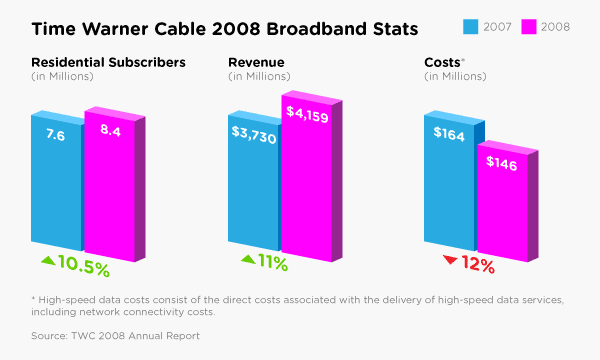
Wired has coverage of NY's Democratic Congressmen Eric Massa's attempts to pass legislation banning Time Warner Cable from introducting usage caps and tiered pricing for their Roadrunner internet services. TWC has been trying out these caps and pricing structures in various markets and apparently finally stepped on the right person's toes by starting to record usage data in Rochester, New York. Wired points out that while playing the "woe is us" card, TWC has been raking in the profits, with their own annual report showing that their broadband costs were down 12% in 2008 while revenues were up 11%. Makes it a little hard to justify how the power users are beating your service providings into the ground while you're rolling around in Scrouge McDuck's vault.
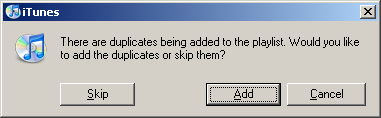
Stupid new "iTunes DJ" who replaced "Party Shuffle" has a bad attitude when you try to listen to songs he's already got "queued up to spin" as the kids would say
Tim Berners Lee sums up Net Neutrality:
"Net Neutrality says: "If I pay to connect to the Net with a certain quality of service, and you pay to connect with that or greater quality of service, then we can communicate at that level."
That's all. Its up to the ISPs to make sure they interoperate so that that happens.
Net Neutrality is NOT asking for the internet for free.
Net Neutrality is NOT saying that one shouldn't pay more money for high quality of service. We always have, and we always will."
Written in 2006, unfortunately it's now 2009 and the telcos are still trying to confuse the common consumer into thinking Net Neutrality is Google trying to trick consumers into paying for Google's internet bill.
There's been much brew-ha-ha about the NY Times being in financial trouble, the death of newspapers, and print media in general. For the last couple years, however, the Times has been doing some really great work with flash based visualizations that tie into their print articles, but obviously are available only the web. So maybe the the death of the print newspaper doesn't mean that the big, well known papers will die.
What really interests me is the stuff they've had coming out recently showing that they really are embracing the open concepts that are flourishing on the web. Within a month they've announced Represent and the Congress API, two very cool usages of publicly available data that was previously only available in a mishmash of formats. They're combining, enhancing, analyzing and promoting data in very new and innovative ways.
The Times moving in this direction seems to coencide with a growing call for "open government" which has seemed to start as a grassroots, web powered, effort and will hopefully take hold in the new administration. It seems the Times is uniquely positioning itself within this new world order to become the seminal information source for computers and the autonomous world that it already is for humans. This is a very interesting direction for the Times to take and I'm not sure if it's officially supported from the top. It seems that it either has to be getting discussed in the top echolons or the IT group has a huge amount of freedom to make very bold moves and think well outside the existing dead tree based box. Either way it's the kind of agility and/or forward thinking that could make the Times the Queen of the new web news world.
"Oh shit," he mumbled. "I just broke the Internet." Wired has an article on the big DNS flaw. There's been lots of technical re-hashing of this, but I just thought the quote was funny
Back when Google Gears came out and they added Google Reader support it was great for riding the train, because I could take feed reading offline and spend time on the train catching up on my feeds. This process went along swimmingly until I installed Firefox 3 beta and the initial public release. Since the Gears version at the time wasn't Firefox 3 compatible I couldn't continue doing this and it wasn't worth it to me to hack the Gears version support, etc. Jump forward several months and 2 or 3 trips without offline Reader and the Gears team released a version supporting 3.0 and I went to the web page to download it. On the page it lists compatible browsers and when I read "Internet Explorer" I started laughing hysterically. I never even considered the fact that I could use Gears in Internet Explorer to keep using the offline support.
To me, Internet Explorer does not come up when enumerating web browsers installed on my machine. Internet Explorer is the front end to the 1997 MS best practices lovefest vendor application I have to support and nothing more. Even with the vendor product lock in I still go 1-2 weeks without ever having to open IE. How do people survive on this half baked wanna be browser, and don't tell me they use IE7 or IE8 cause we all know they're just half backed circa 2008 and 2006 rather than 2001.